Historical accuracy and dramatic license
The 2020 filmed production of Hamilton is a cultural phenomenon that balances rigorous historical grounding with creative license. When evaluated for its historical record, as well as its strengths and limitations as both education and entertainment, the film functions less as a literal documentary and more as an interpretive gateway to America’s founding.
Historical Accuracies and Inaccuracies
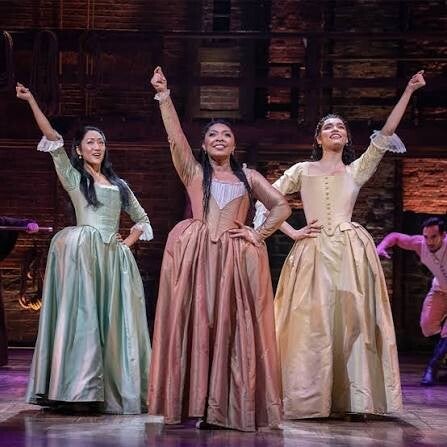
The production grounds its narrative in authentic historical records, tracing Hamilton’s Caribbean origins, his meteoric rise as George Washington’s indispensable wartime aide, and his role in drafting The Federalist Papers. Key legislative struggles—including the Compromise of 1790, the so-called “dinner deal” that exchanged federal assumption of state debts for a Southern location for the national capital—and the Reynolds Affair blackmail scandal are portrayed with close attention to period documents.
However, the film also takes significant dramatic liberties, simplifying timelines and reshaping personal biographies. Angelica Schuyler was already married with children when she met Hamilton, and her father had surviving sons, contradicting the central dramatic motivation presented in “Satisfied.” Politically, the film amplifies Hamilton’s abolitionist convictions while downplaying his aristocratic distrust of democracy. In reality, Hamilton bought and sold enslaved people on behalf of his in-laws and often subordinated antislavery ideals to property rights and constitutional ratification. The chronology is also frequently adjusted for dramatic effect, as in the depiction of John Adams firing Hamilton from the Treasury; Hamilton had, in fact, resigned years earlier during Washington’s second term.
Educational Strengths and Weaknesses
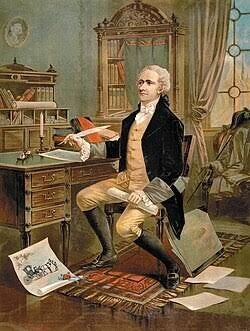
From an educational perspective, Hamilton excels at demonstrating the dense institutional mechanics that traditional history classes often fail to bring to life. By translating cabinet debates on national banking, debt assumption, and the 1793 Neutrality Proclamation into rhythmic, compelling exchanges, it makes foundational political ideas more accessible. Its intentional, color conscious casting also allows modern students to engage with early American governance as a living, contested experiment rather than a static narrative.
On the other hand, its greatest educational limitation is the risk of substitution viewers may mistake theatrical shorthand for complete historiography. By centering Hamilton as a modern, progressive immigrant icon, the production can obscure the founding era’s systemic complicity in chattel slavery and reduce figures such as James Madison and Thomas Jefferson to near caricatures in order to elevate the title character.
Entertainment Strengths and Weaknesses
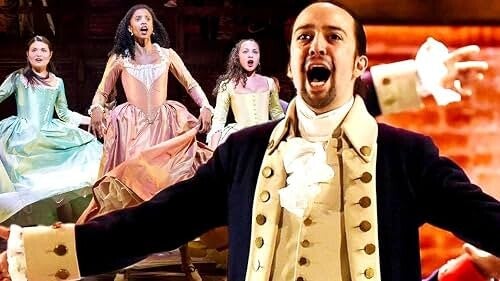
As entertainment, the 2020 film succeeds through virtuosic musical architecture and dynamic stage design. Miranda's fusion of hip-hop, R&B, and traditional Broadway tunes creates narrative momentum, while David Korins's stage externalizes themes of political movement, time, and memory. Cinematic direction enhances the production with intimate close-ups that capture vocal performances and vulnerability in quieter moments such as "Quiet Uptown."
Its main weakness is demanding density and occasional pacing fatigue over its 160 minute runtime. The continuous, sung through format packs extraordinary lyrical information into every measure, potentially overwhelming viewers unfamiliar with early American politics. Compressing decades of ideological conflict into Hamilton and Aaron Burr's rivalry also somewhat flattens the broader social forces shaping the early republic.
Create Your Own Website With Webador